
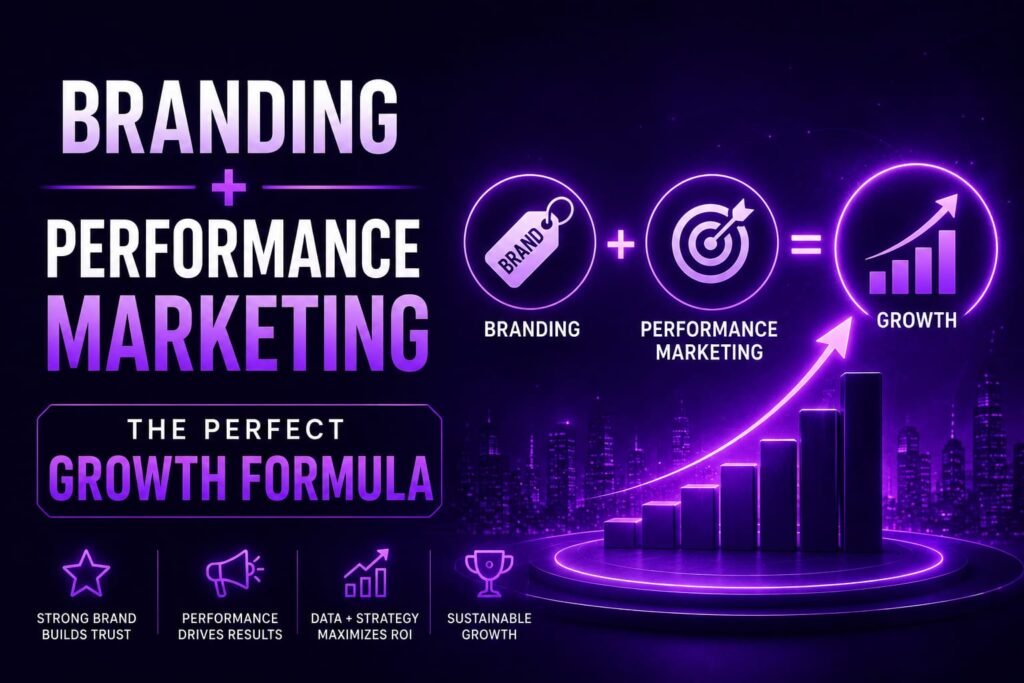
Branding + Performance Marketing: The Perfect Growth Formula for Sustainable Business Growth
In today’s highly competitive digital landscape, businesses can no longer rely on a single marketing strategy to achieve long-term success. While branding helps create recognition, trust, and loyalty, performance marketing focuses on generating measurable results such as leads, sales, and conversions. When combined effectively, branding and performance marketing become the perfect growth formula for businesses looking to scale sustainably.
What is Branding?
Branding is the process of creating a unique identity for your business. It includes your logo, website design, brand voice, messaging, values, and overall customer experience. A strong brand helps customers recognize and remember your business.
Successful branding answers questions like:
- Who are you?
- What do you stand for?
- Why should customers trust you?
- What makes you different from competitors?
When customers connect emotionally with a brand, they are more likely to choose it repeatedly, recommend it to others, and become loyal advocates.
Benefits of Strong Branding
- Builds trust and credibility
- Increases customer loyalty
- Improves brand recognition
- Creates a competitive advantage
- Supports long-term business growth
What is Performance Marketing?
Performance marketing is a results-driven marketing approach where businesses pay for specific actions such as clicks, leads, downloads, or sales. Unlike traditional marketing, every campaign can be tracked and measured.
Common performance marketing channels include:
- Search Engine Marketing (SEM)
- Pay-Per-Click (PPC) Advertising
- Social Media Advertising
- Email Marketing
- Affiliate Marketing
- Conversion Rate Optimization (CRO)
The primary goal is to generate measurable business outcomes while maximizing return on investment (ROI).
Benefits of Performance Marketing
- Immediate traffic and leads
- Measurable results
- Better budget control
- Scalable campaigns
- Data-driven decision-making
Why Branding Alone Isn’t Enough
Many businesses invest heavily in branding but struggle to generate consistent leads and sales. While branding creates awareness, it often takes time to convert audiences into paying customers.
For example, a beautifully designed website and strong social media presence may attract attention, but without targeted campaigns and conversion-focused strategies, potential customers may never take action.
Branding creates interest, but performance marketing drives action.
Why Performance Marketing Alone Isn’t Enough
On the other hand, businesses that focus only on performance marketing often experience rising advertising costs and lower customer trust.
When consumers see ads from a brand they’ve never heard of, they may hesitate to click or purchase. This leads to:
- Higher cost-per-click (CPC)
- Lower conversion rates
- Reduced customer retention
- Dependency on paid advertising
Without a strong brand foundation, performance marketing becomes more expensive and less effective over time.
The Power of Combining Branding and Performance Marketing
The most successful companies understand that branding and performance marketing work best together.
Branding creates awareness and trust, while performance marketing converts that trust into measurable business results.
How They Complement Each Other
1. Branding Increases Ad Performance
Consumers are more likely to engage with ads from brands they recognize. Strong branding improves click-through rates and conversion rates, reducing advertising costs.
2. Performance Marketing Amplifies Brand Visibility
Paid campaigns help your brand reach new audiences quickly. Every advertisement becomes an opportunity to strengthen brand recognition.
3. Better Customer Journey
Branding attracts and nurtures potential customers, while performance marketing guides them toward taking action.
4. Higher Return on Investment
Businesses with strong branding often achieve better advertising performance, leading to higher ROI and lower acquisition costs.
Building the Perfect Growth Formula
Step 1: Define Your Brand Identity
Start by creating a clear brand identity.
Focus on:
- Brand mission
- Unique value proposition
- Target audience
- Visual identity
- Brand messaging
Consistency across all platforms is essential.
Step 2: Create Valuable Content
Content bridges the gap between branding and performance marketing.
Examples include:
- Blog posts
- Social media content
- Videos
- Case studies
- Customer testimonials
High-quality content builds authority and trust while supporting paid marketing campaigns.
Step 3: Invest in Performance Marketing
Use targeted advertising to reach potential customers.
Popular channels include:
- Google Ads
- Meta Ads (Facebook & Instagram)
- LinkedIn Ads
- YouTube Ads
Focus on campaigns that align with your business objectives.
Step 4: Track and Optimize
Monitor key performance indicators (KPIs) such as:
- Website traffic
- Lead generation
- Conversion rate
- Cost per acquisition
- Return on ad spend (ROAS)
Data helps improve both branding and performance marketing strategies over time.
Step 5: Retarget and Nurture
Most customers don’t convert on their first interaction. Retargeting campaigns help re-engage visitors who have already interacted with your brand.
This creates multiple touchpoints and increases conversion opportunities.
Real-World Example
Imagine a digital marketing agency launching a new service.
Branding Activities
- Professional website design
- Consistent social media presence
- Educational blog content
- Strong visual identity
Performance Marketing Activities
- Google Search Ads
- Facebook Lead Generation Ads
- Retargeting Campaigns
- Email Marketing Automation
The branding efforts build trust and awareness, while performance marketing generates qualified leads and sales. Together, they create a predictable growth engine.
Common Mistakes to Avoid
Ignoring Brand Building
Focusing only on sales-driven campaigns can limit long-term growth.
Inconsistent Messaging
Your ads, website, and social media should communicate the same brand message.
Measuring Only Short-Term Results
Branding often takes time to show its full impact. Balance immediate performance metrics with long-term brand-building goals.
Neglecting Customer Experience
A strong brand promise must be supported by excellent customer service and user experience.
Conclusion
Branding and performance marketing are not competing strategies—they are complementary forces that drive business growth. Branding builds trust, credibility, and emotional connections, while performance marketing delivers measurable results and revenue.
Businesses that successfully combine both approaches create a powerful marketing ecosystem that attracts, converts, and retains customers. Whether you’re a startup, freelancer, or established company, integrating branding with performance marketing is the key to achieving sustainable and scalable growth.
Invest in your brand. Optimize for performance. Grow with confidence.*